GREAT ITALIAN FURNITURE DESIGNERS

GREAT ITALIAN FURNITURE DESIGNERS

Francesco Binfaré

Francesco Binfaré is an intellectual, artist and designer, he has a deep and consolidated path with Edra over the years. He was born and lives in Milan and learned drawing and painting from his father. Since 1960 he has practiced art in the industrial field, assuming above all the role of artistic director of research centers and project promotion, involving architects and designers in the creation of products destined to become historical pieces of Italian and international design. In 1992, he was called by Massimo Morozzi to design for Edra. The meeting marked the beginning of a new season, with the invention of important sofas, with extraordinary expressive and innovative strength.

In the world of high-end design, Edra stands as a symbol of Italian excellence, renowned worldwide. The Tuscan brand, built on a deep understanding of materials and a balance between technology and cultural craftsmanship, has redefined the very concept of comfort through patented solutions such as Gellyfoam® and the Smart Cushion. These innovations — born from an ongoing dialogue between engineering and art — are the foundation of some of the most iconic sofas in contemporary design, created by Francesco Binfaré.

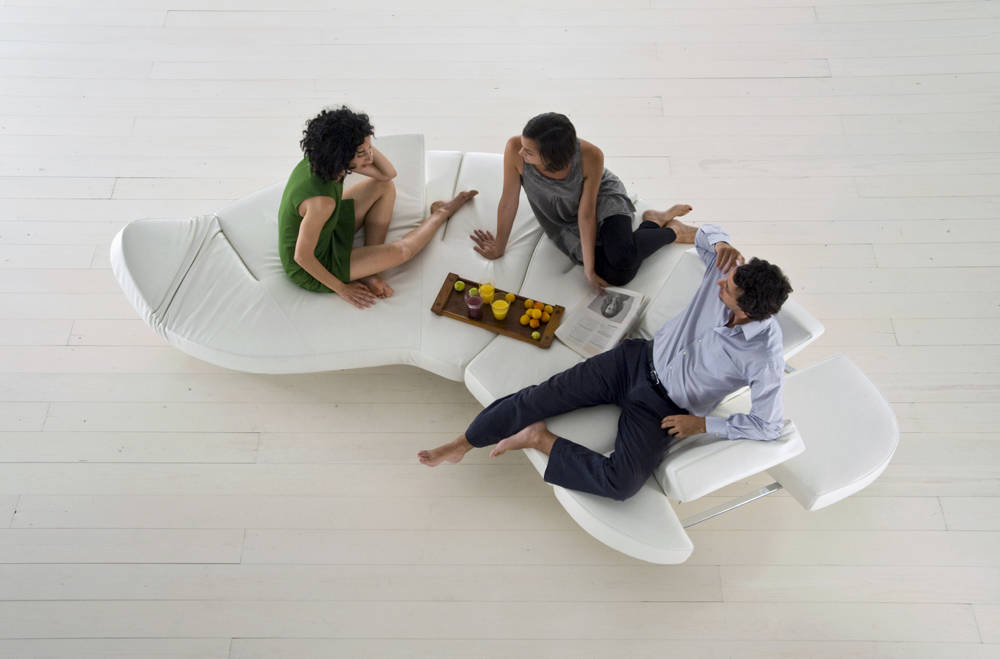
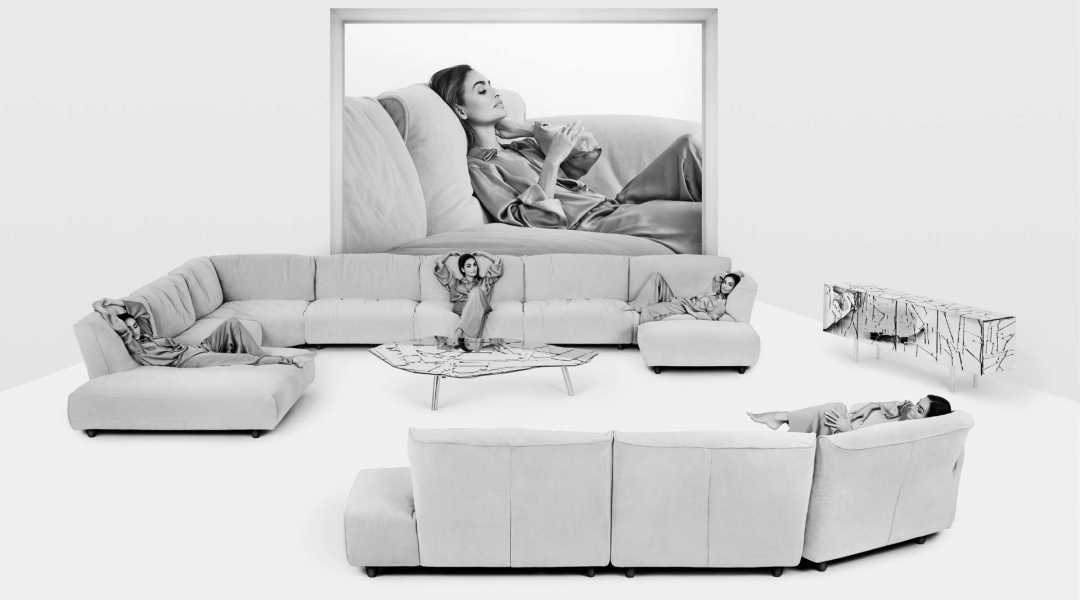
Gellyfoam®: The New Frontier of Softness Among Edra’s revolutionary patents, Gellyfoam® represents a breakthrough in the field of seating comfort. It is an exclusive material that combines elasticity and variable densities, offering uniform support and an unmatched sensation of softness. Unlike traditional polyurethane foams, Gellyfoam® gently embraces the body while maintaining resilience and lasting performance over time. This technological core is found in pieces such as the Standard Sofa by Francesco Binfaré, where free composition and sculptural comfort come together in perfect harmony — redefining the very act of relaxation.

Design, Research, and the Culture of Made in Italy Every Edra creation emerges from the encounter between technological experimentation and artistic sensibility. The collaboration with visionary designers like Francesco Binfaré expresses a design philosophy that doesn’t follow trends — it sets them. Each piece reflects a balance of innovation, craftsmanship, and emotion, conceived to last and to engage with the living environment. At Edra, technology is never ostentatious: it is the invisible soul that gives life to timeless comfort and aesthetic purity.

Interni: Official Edra Retailer Interni is an official Edra retailer, proudly showcasing the brand’s most iconic pieces in its showrooms. From Standard to Flap, from Grande Soffice to On the Rocks, visitors can experience firsthand the unique quality and comfort of Gellyfoam® and the Smart Cushion. Book an appointment to visit our showroom or schedule a personal design consultation with our interior experts. Discover how to integrate Edra products into your residential or contract projects, and bring into your spaces a perfect harmony of technology, artistry, and intelligent comfort.
Francesco Binfaré

Francesco Binfaré is an intellectual, artist and designer, he has a deep and consolidated path with Edra over the years. He was born and lives in Milan and learned drawing and painting from his father. Since 1960 he has practiced art in the industrial field, assuming above all the role of artistic director of research centers and project promotion, involving architects and designers in the creation of products destined to become historical pieces of Italian and international design. In 1992, he was called by Massimo Morozzi to design for Edra. The meeting marked the beginning of a new season, with the invention of important sofas, with extraordinary expressive and innovative strength.

In the world of high-end design, Edra stands as a symbol of Italian excellence, renowned worldwide. The Tuscan brand, built on a deep understanding of materials and a balance between technology and cultural craftsmanship, has redefined the very concept of comfort through patented solutions such as Gellyfoam® and the Smart Cushion. These innovations — born from an ongoing dialogue between engineering and art — are the foundation of some of the most iconic sofas in contemporary design, created by Francesco Binfaré.

Gellyfoam®: The New Frontier of Softness Among Edra’s revolutionary patents, Gellyfoam® represents a breakthrough in the field of seating comfort. It is an exclusive material that combines elasticity and variable densities, offering uniform support and an unmatched sensation of softness. Unlike traditional polyurethane foams, Gellyfoam® gently embraces the body while maintaining resilience and lasting performance over time. This technological core is found in pieces such as the Standard Sofa by Francesco Binfaré, where free composition and sculptural comfort come together in perfect harmony — redefining the very act of relaxation.

Design, Research, and the Culture of Made in Italy Every Edra creation emerges from the encounter between technological experimentation and artistic sensibility. The collaboration with visionary designers like Francesco Binfaré expresses a design philosophy that doesn’t follow trends — it sets them. Each piece reflects a balance of innovation, craftsmanship, and emotion, conceived to last and to engage with the living environment. At Edra, technology is never ostentatious: it is the invisible soul that gives life to timeless comfort and aesthetic purity.

Interni: Official Edra Retailer Interni is an official Edra retailer, proudly showcasing the brand’s most iconic pieces in its showrooms. From Standard to Flap, from Grande Soffice to On the Rocks, visitors can experience firsthand the unique quality and comfort of Gellyfoam® and the Smart Cushion. Book an appointment to visit our showroom or schedule a personal design consultation with our interior experts. Discover how to integrate Edra products into your residential or contract projects, and bring into your spaces a perfect harmony of technology, artistry, and intelligent comfort.
Antonio Citterio

Antonio Citterio

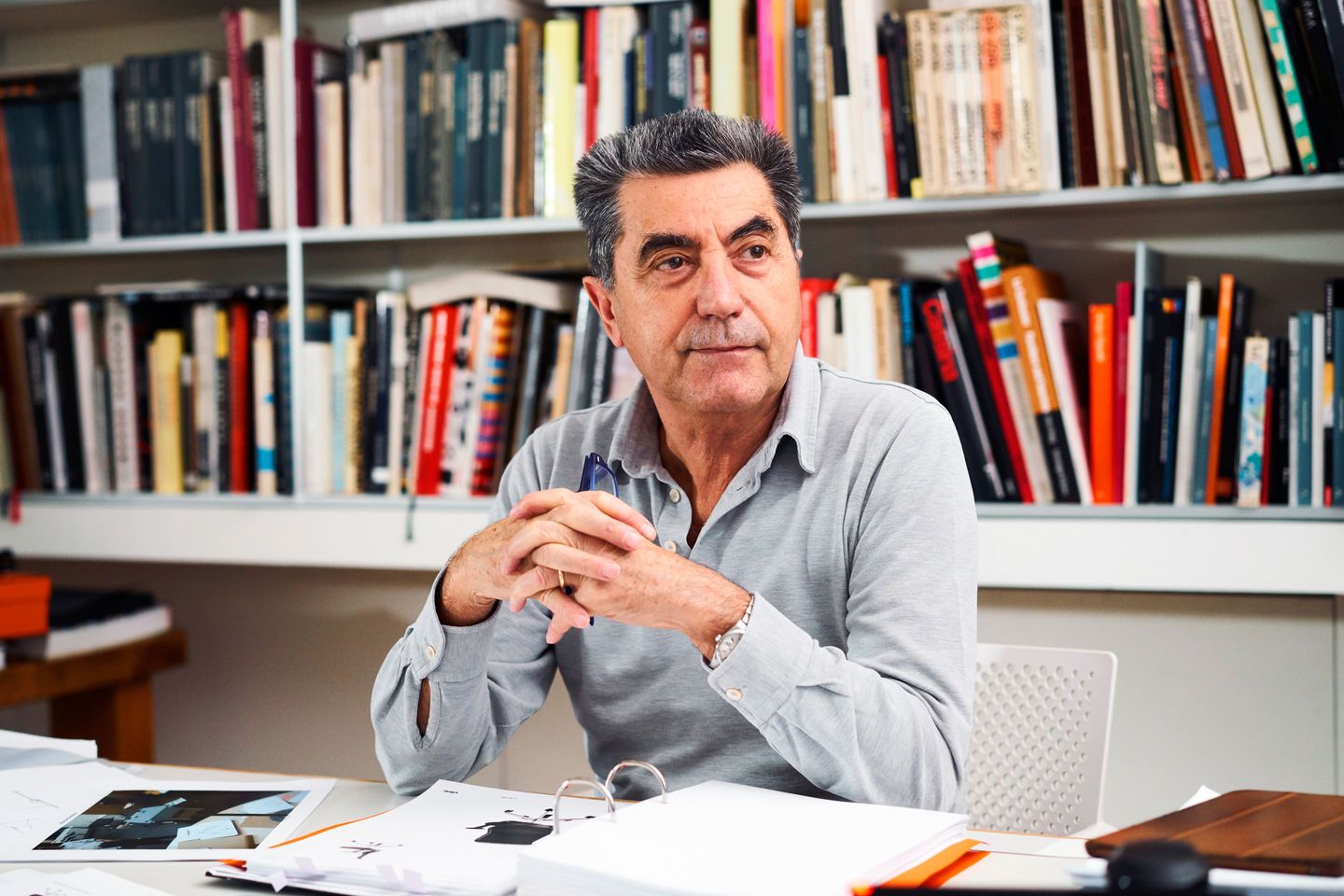
Antonio Citterio was born in Meda (Milano) in 1950, and started his design office in 1972, graduating in architecture at the Politecnico di Milano in 1975. Between 1987 and 1996 he worked in association with Terry Dwan and, together, they designed buildings in Europe and Japan.

In 2000, with Patricia Viel, he founded a practice for architecture and interior design, developing international complex long-term projects, at all scales and in synergy with a qualified network of specialist consultants. The studio has today taken the name of "Antonio Citterio Patricia Viel". Antonio Citterio currently works in the industrial design sector with numerous Italian and foreign companies. In 1987 and in 1994 he was awarded the Compasso d’Oro-ADI. From 2006 to 2016 he has been professor of Architectural Design at the Mendrisio Academy of Architecture (Switzerland). In 2008 he was honoured by the Royal Society for the Encouragement of Arts, Manufactures & Commerce of London, which gave him the title of “Royal Designer for Industry”.

Antonio Citterio is art director of Maxalto, Arclinea and Azucena.

The course will introduce students to the historical development of Italian architecture and its influence today. Like Janus, Roman god of beginnings, transitions and passages, the course will explore the past in order to understand the future of design.

Subjects range from Etruscan architecture, ancient Rome’s construction innovations of arches, vaults, domes and city planning to the rebirth of classical orders during the Renaissance to contemporary Italian movements of Futurism and Rationalism. Topics will explore the writings from Vitruvius, Alberti and Palladio to the contemporary manifestos of Antonio Sant’Elia, Giuseppe Terragni, Aldo Rossi and Gruppo 7.

Lecture subjects will also address the influence of travel in transmitting Italy’s influence through the Grand Tour (17c. to 18c.) as well as travel by contemporary architects (including Louis Kahn and his discovery of Roman ruins, Robert Venturi and his longstanding relationship with Rome, Le Corbusier's journey to east). The course will include the role of Andrea Palladio, through the legacy of Vitruvius, in disseminating his ideas.

The seminar will also address travel as design process and instrument in creativity and production of architectural knowledge. Examples are Louis Kahn and his travels to Rome, Robert Venturi and his long-standing relationship with Rome as well as Le Corbusier’s journey to the east in his formative years. For architects traveling abroad foreign culture and landscape can be critical factors in shaping future design thinking.

We will discuss the role of Italian Rationalist architecture and Italian cinema’s Neorealism in the the production of space. Architecture and cinema both articulate lived-space. Like cinema, architecture exists in dimensions of time, movement and emotions.

The course will conclude with an in-depth study of Lina Bo Bardi, Italian born Brazilian architect (1914-1992). We will investigate the phenomena of cultural displacement and dissemination in Bo Bardi’s design thinking. Bo Bardi was educated in Rome, trained in Milan and immigrated to Brazil after World War II. In Brazil she evolved from her Modernist training into a uniquely humanist architect influenced both by the culture of her native Italy and the indigenous culture of Bahia in her adopted Brazil.

Carlo Mollino

These innovations — born from an ongoing dialogue between engineering and art — are the foundation of some of the most iconic sofas in contemporary design, created by Francesco Binfaré.


Carlo Mollino is remembered as much for his art and designs as for his fondness for cars, airplanes, and winter sports—influences that are easily seen in his works. In the sinuous curves of the wooden frames that support his tables, one may retrace snow-covered slopes for skiing and tracks where he used to drive his fast cars. The metal joints connecting many of his design pieces recall aviation engineering and his alpine architectures show frames rising up into the sky.

After studying Architecture at Politecnico di Torino in 1931, Mollino worked with his father who ran an engineering company, but by the 1940s, he was creating his own one-of-a-kind designs for chairs, tables, and even automobiles. (In 1955, he co-designed the Bisiluro da Corsa, a sleek, experimental race car with twin hulls for the 24 Hours of Le Mans.) One of his most recognizable designs is the Fenis chair (1959)—sculpted from solid maple wood and characterized by its folk-inspired backrest of two carved vertical slats. Another signature work is the Cavour Desk (1949), designed for his Turin office: a daring mix of glass, floating drawers, and a swooping wooden leg that channels both propeller blades and alpine slopes. Forever in search of lightness and dynamism, Mollino was one of the few architects to introduce elements of Surrealist art and culture into the Modern Movement: “Only when a work is not explainable other than in terms of itself can we say that we are in the presence of art,” he once said.

Today, you can visit Museo Casa Mollino in Turin, the designer’s most enigmatic project. Conceived in the 1960s—not as a residence, but as a kind of metaphysical retreat—Casa Mollino was never meant to be lived in. Overlooking the River Po, the apartment was a private, symbolic work filled with layers of esoteric references: velvet-draped rooms, gold-leafed nudes, erotic photography, and a precise blend of Baroque opulence and modernist control. Everything down to the textiles and tableware was selected by Mollino himself. Uninhabited during his lifetime and only revealed to the public decades after his death, the space reads like a three-dimensional autobiography and can be visited by tour only.

Few designers could make rattan feel architectural or turn a bookshelf into a feat of engineering. Franco Albini did both—applying Rationalist principles to humble materials in projects from armchairs to metro stations.

After studying architecture at Politecnico di Milano, Albini trained under Gio Ponti and soon emerged as a central figure in the Rationalist movement before WWII. He was drawn to traditional Italian techniques but approached them with a modernist’s eye—experimenting with affordability, lightness, and modularity. His early experiments with bent cane and rattan led to the Margherita (1950) and Gala chairs, produced by Bonacina: airy forms that looked like sculpture but were made for everyday use.